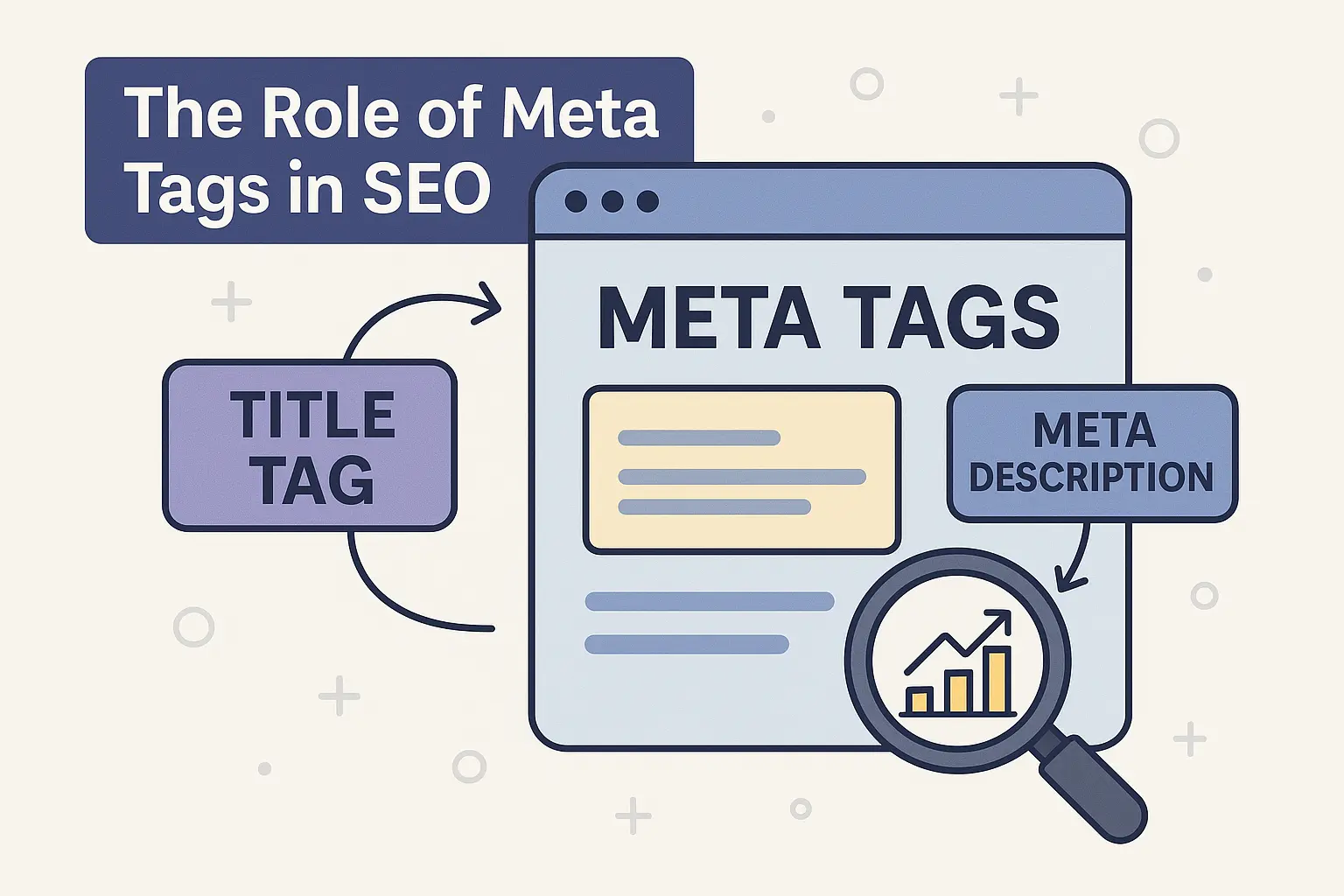
When it comes to improving your website’s visibility on search engines, meta tags in SEO play a crucial behind-the-scenes role. They might not be visible on the webpage itself, but they help search engines understand what your content is about — and influence whether users click on your link in search results.
In this post, we’ll explore the most important meta tags for SEO: title tags and meta descriptions, and explain how they affect your site’s performance in search engine rankings.
What Are Meta Tags in SEO?
Meta tags in SEO are snippets of HTML code placed in the <head> section of a webpage that help search engines understand what your content is about. These tags include elements like the title tag and meta description, which provide essential metadata for indexing and displaying your page in search results. While they aren’t visible to users on the page itself, meta tags in SEO play a critical role in how your site appears on search engines and influence whether users decide to click your link.
1. Title Tags
What Is a Title Tag?
The title tag is the clickable headline that appears in search engine results pages (SERPs). It also appears at the top of your browser tab.
Example:
<title>The Role of Meta Tags in SEO - MakeMandu</title>
Why Title Tags Matter for SEO
- Ranking Factor: Search engines like Google consider the title tag one of the most important on-page SEO elements.
- Keyword Usage: Including your target keyword in the title tag helps search engines understand your content and improves relevance.
- User Clicks: A clear, engaging title encourages users to click your link over others in the SERPs.
Best Practices
- Keep it under 60 characters (so it doesn’t get cut off).
- Include your primary keyword close to the beginning.
- Make it compelling to increase click-through rate (CTR).
2. Meta Descriptions
What Is a Meta Description?
The meta description is a short summary of your webpage’s content. It appears below the title tag in search results.
Example:
<meta name="description" content="Learn how title tags and meta descriptions influence SEO rankings and why they're essential for getting more traffic to your website.">
Does It Directly Affect Rankings?
Google has stated that meta descriptions are not a direct ranking factor, but they do influence CTR — and that matters because higher CTR can indirectly boost rankings.
Why Meta Descriptions Are Important
- Improved CTR: A well-written description can convince users to click your result over others.
- Keyword Highlighting: If the search term matches part of your description, Google may bold it — making it stand out more.
- More Context: It helps users understand what they’ll find on the page.
Best Practices
- Keep it around 150–160 characters.
- Use a clear call-to-action (e.g., “Learn more”, “Discover now”).
- Include your main keyword naturally.
Bonus: Other Helpful Meta Tags
- Meta Robots Tag: Tells search engines whether to index a page or follow links.
<meta name="robots" content="index, follow"> - Viewport Tag (important for mobile SEO):
<meta name="viewport" content="width=device-width, initial-scale=1.0">
Final Thoughts
Meta tags might seem small, but their impact on your SEO is significant. A strong title tag helps you rank better and attract more clicks, while a compelling meta description can be the difference between getting noticed or being ignored.
As you optimize your website, don’t forget to review your meta tags on every page. They are often the first impression a user has of your content — so make it count!
Quick SEO Checklist
Include a unique title tag on every page
Add a relevant meta description for each page
Use your primary keywords naturally
Keep title tags under 60 characters
Keep meta descriptions under 160 characters
Leave a Reply