Understanding Keywords and Search Intent: Why It Matters for SEO Success
When it comes to SEO, keywords are only half the battle. To truly rank and bring in the right traffic, you need to understand something even more important — search intent. This concept is at the heart of keyword strategy and can be the difference between a visitor who bounces and one who converts.
What Is Search Intent?
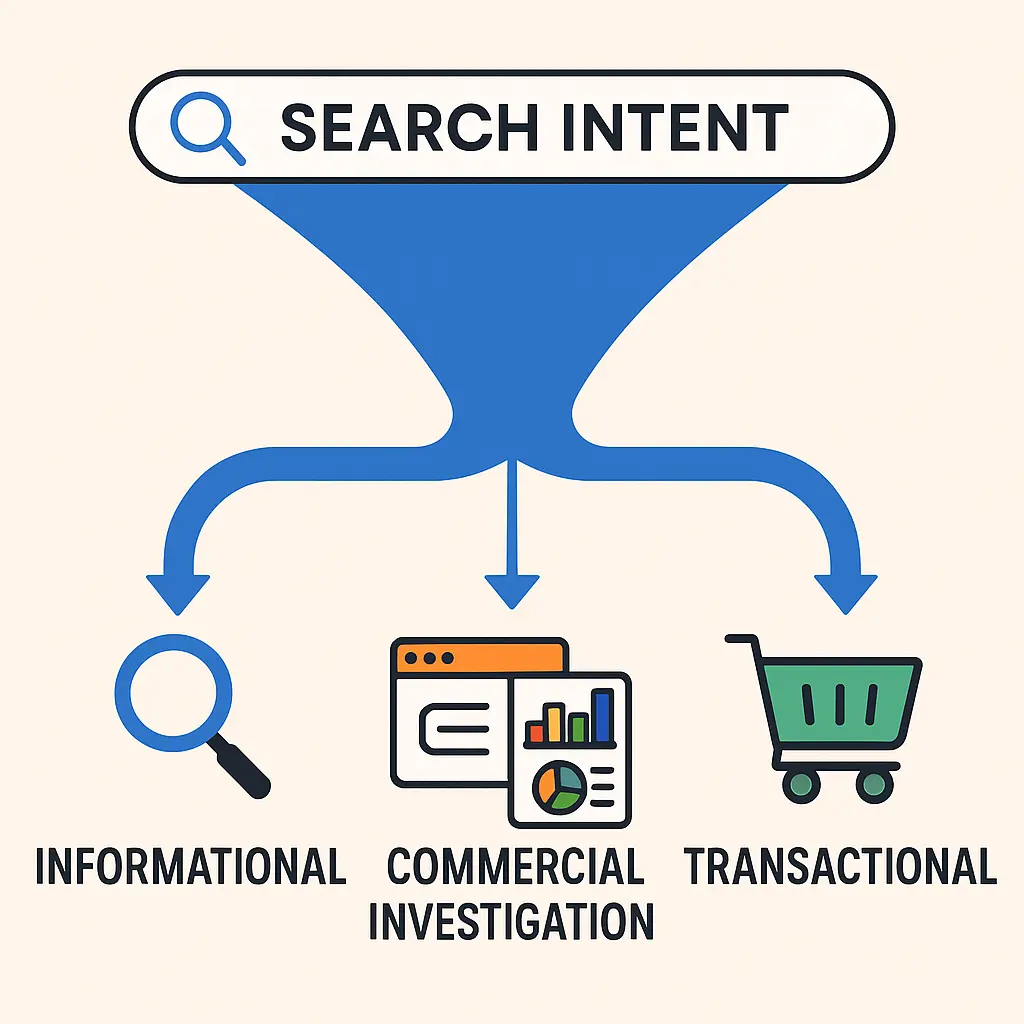
Search intent (also called user intent) is the reason behind a user’s search query. It’s the “why” behind the words they type into Google. Are they looking for information, trying to buy something, or comparing options? Understanding this intent helps you tailor your content to match exactly what they need.
There are generally four types of search intent:
- Informational – The user wants to learn something.
Example: “how to brew coffee at home” - Navigational – The user is looking for a specific website or page.
Example: “YouTube login” - Transactional – The user is ready to make a purchase or take an action.
Example: “buy DSLR camera online” - Commercial Investigation – The user is comparing options before making a decision.
Example: “best budget DSLR camera 2025”
Why Search Intent Matters in Keyword Strategy
A common SEO mistake is to chase keywords based on volume alone — but if your content doesn’t match what the searcher wants, you won’t rank well (or convert visitors). Here’s how intent ties directly into your keyword strategy:
- Better rankings: Google wants to give users exactly what they’re looking for. If your content aligns with intent, it’s more likely to rank.
- Higher engagement: Content that meets user expectations keeps visitors on the page longer, reducing bounce rates.
- More conversions: Matching your keywords to the right stage of the buyer’s journey helps you attract users who are ready to take action.
Matching Keywords with Intent: Real Examples
Let’s say you’re writing for a skincare brand:
- Informational keyword: “how to reduce acne naturally”
👉 Write a blog post with helpful tips and natural remedies. - Commercial Investigation: “best natural acne creams for oily skin”
👉 Create a comparison post or product roundup. - Transactional: “buy organic acne cream”
👉 Optimize your product page for this term.
Notice how the content type and call to action will change depending on the intent.
Tips to Identify Search Intent
- Analyze the SERP: Type your keyword into Google and look at the results. Are they blogs, product pages, videos? The type of content ranking gives clues about intent.
- Use modifiers: Words like “how,” “best,” “buy,” or “vs” often signal the type of intent.
- Group keywords by intent: Organize your keyword research by intent to build out a full content plan that serves users at every stage.
Conclusion
If you want to rank and convert, don’t just target keywords — target the reason behind them. By aligning your content with search intent, you create a better experience for users and get rewarded by search engines. It’s not just about what people are searching for; it’s about why they’re searching.
Leave a Reply